Timber matching: original pieces and new reproductions
A surviving timber piece is often the clearest starting point for a replacement. Our matching photographs show original samples and newly made timber work together, so you can see the details being reproduced.
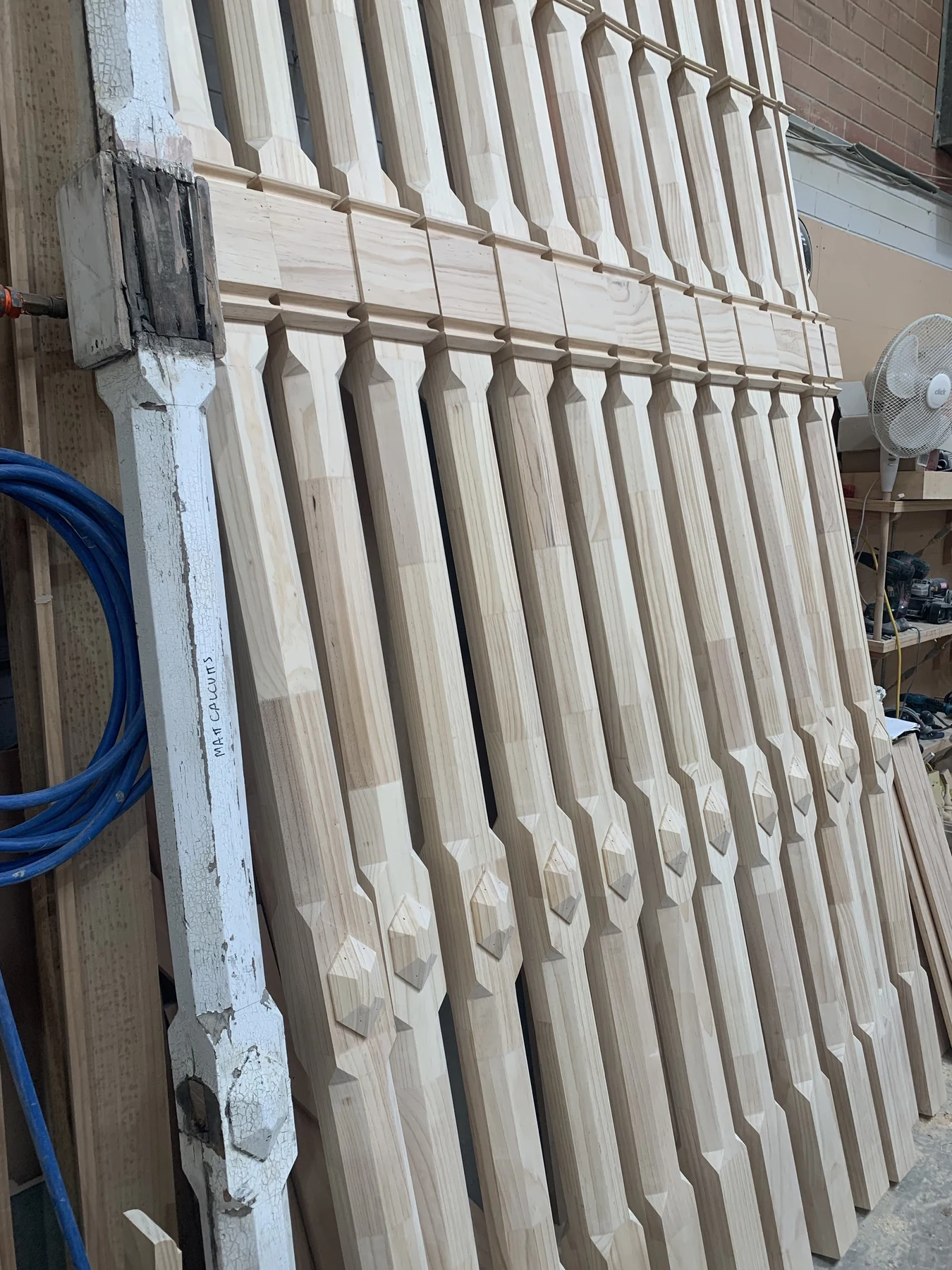
Original beside new reproductionsPainted original decorative timber post beside newly made matching pieces View larger photograph
Photographs from our workshop, product and brochure archive. Different examples are identified separately; original-to-reproduction pairs are labelled. Open any photograph for a larger view.
Seven original-to-reproduction records
These photographs record original pieces alongside new timber reproductions from our matching archive. “Before and after” here means the original sample and the new piece made to match it. It does not mean every example has an installed or painted completion photograph.
Each record explains what can actually be compared. The photographs do not establish a timber species, structural rating, site address or exact dimensions where those details are not recorded.
Decorative post matching
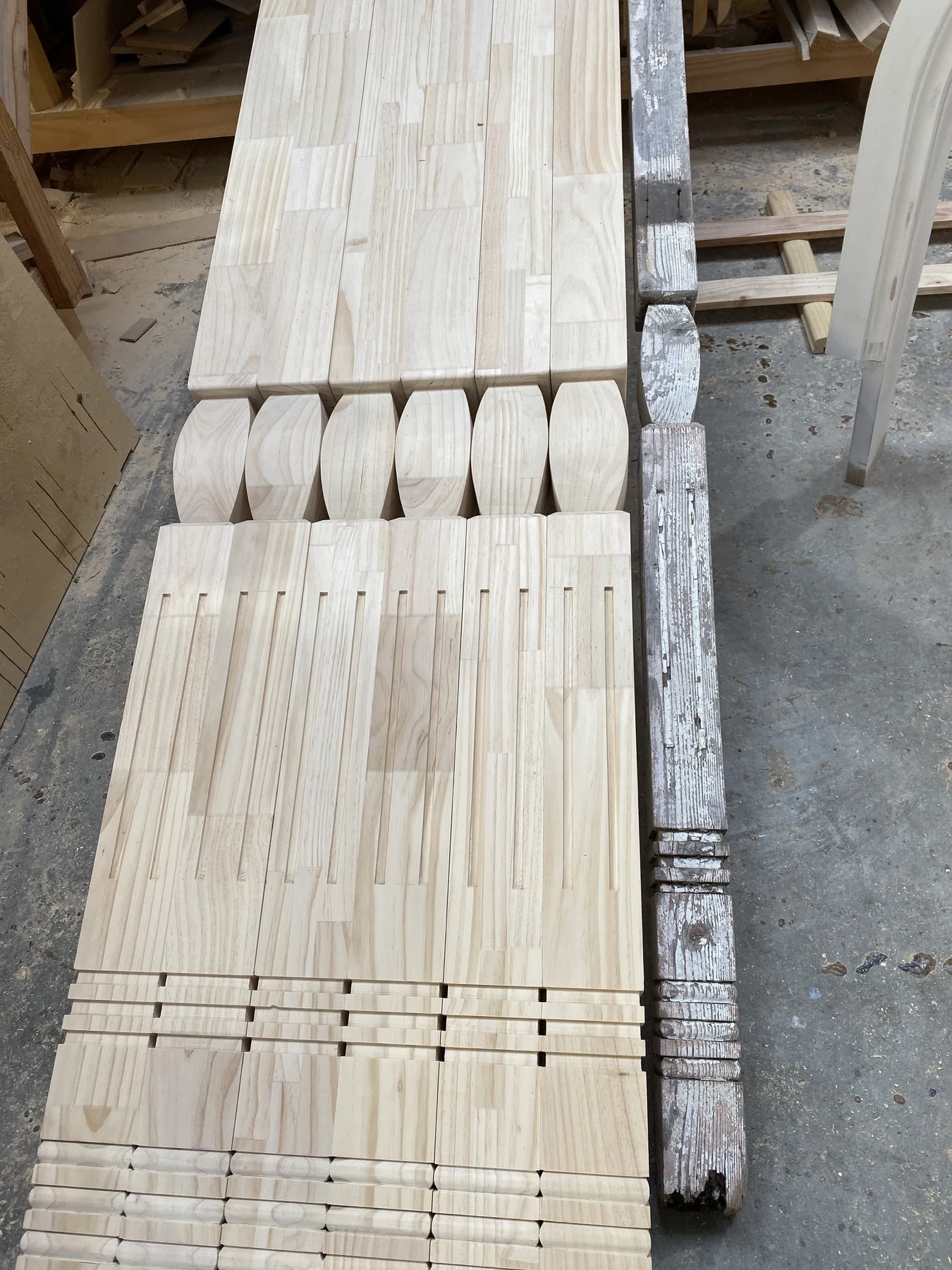
The painted original is shown beside several newly made timber pieces. Compare the shaped sections and repeated bands along the length. The photograph is a workshop matching record; no customer name, installation site or dimensions are assigned to it.
Original beside new reproductionsPainted original decorative timber post beside newly made matching pieces View larger photograph
The weathered painted piece lies beside a group of new timber reproductions. The flutes, shaped ends and bands are the visible features to compare. For a similar enquiry, photograph the complete piece and the profile details beside a tape measure.
Original beside new reproductionsOriginal painted fluted timber piece alongside new matching reproductions View larger photograph
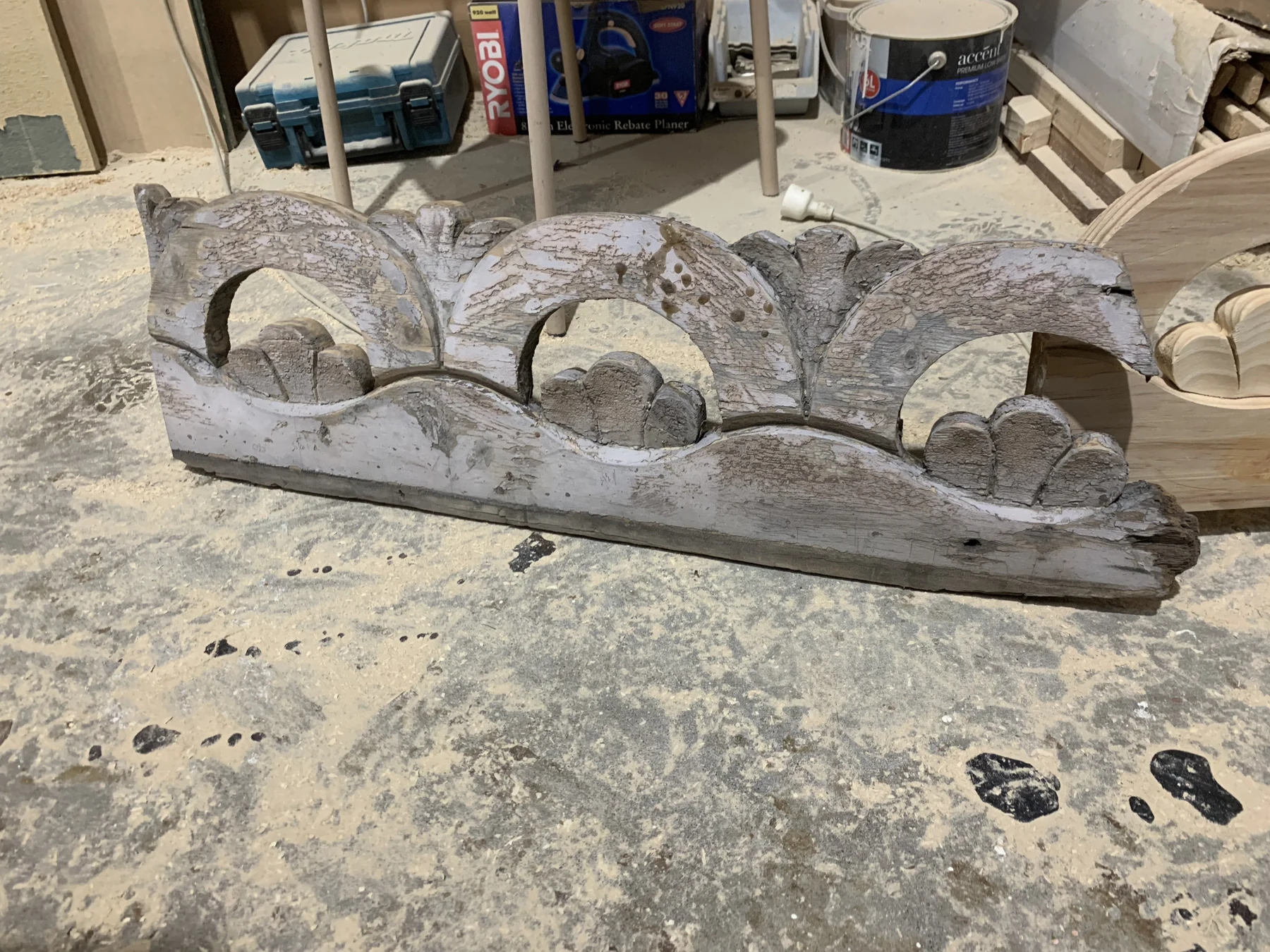
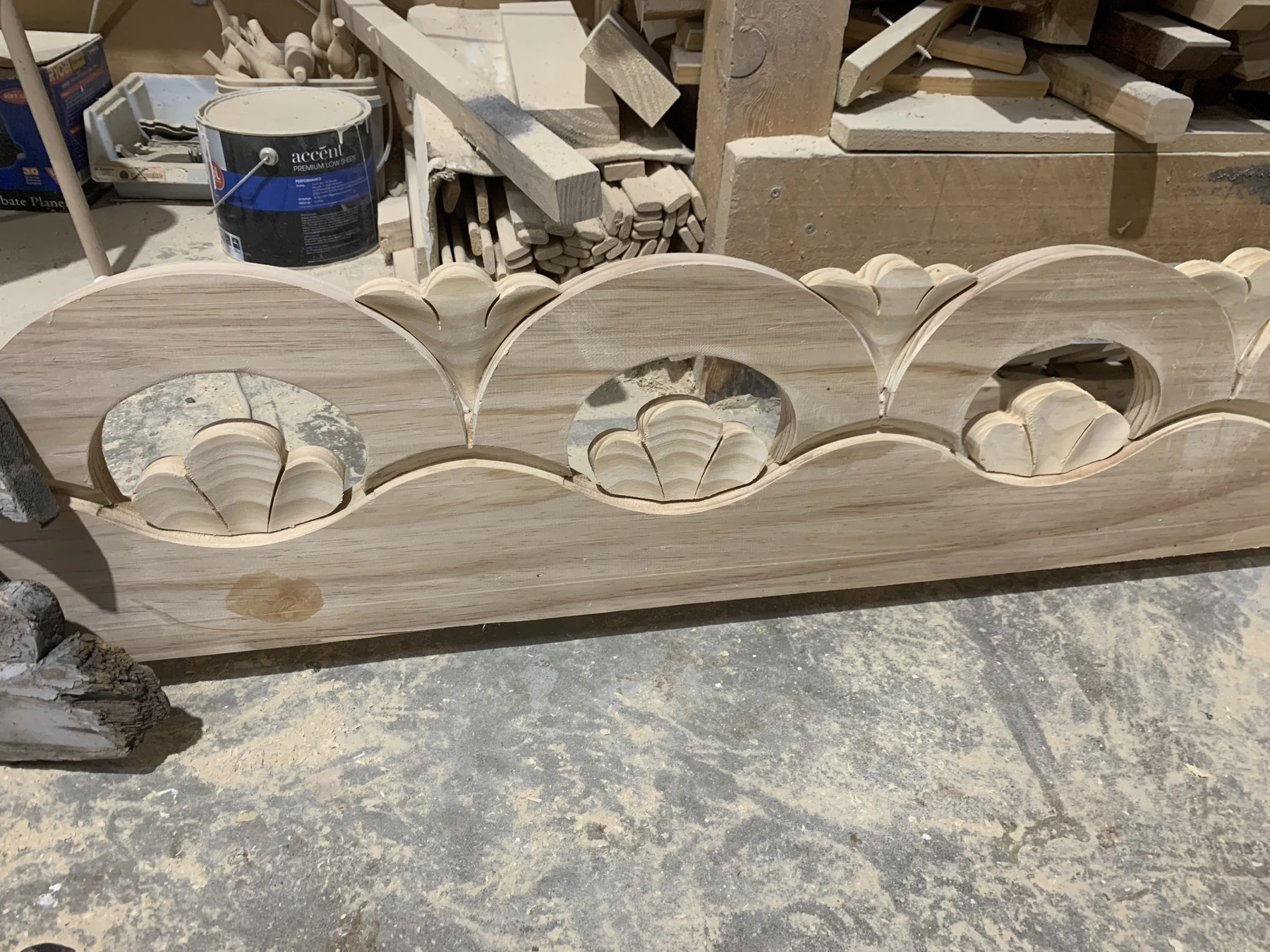
These two archive photographs show the original painted sample and the newly made reproduction. The curved openings and repeated fan-like motifs give a clear reference for comparison. A surviving sample helps explain details that a front-on photograph alone may not show.
Original sampleWeathered painted curved fretwork sample with decorative motifs View larger photographNew reproductionNew timber reproduction of the curved fretwork sample View larger photograph
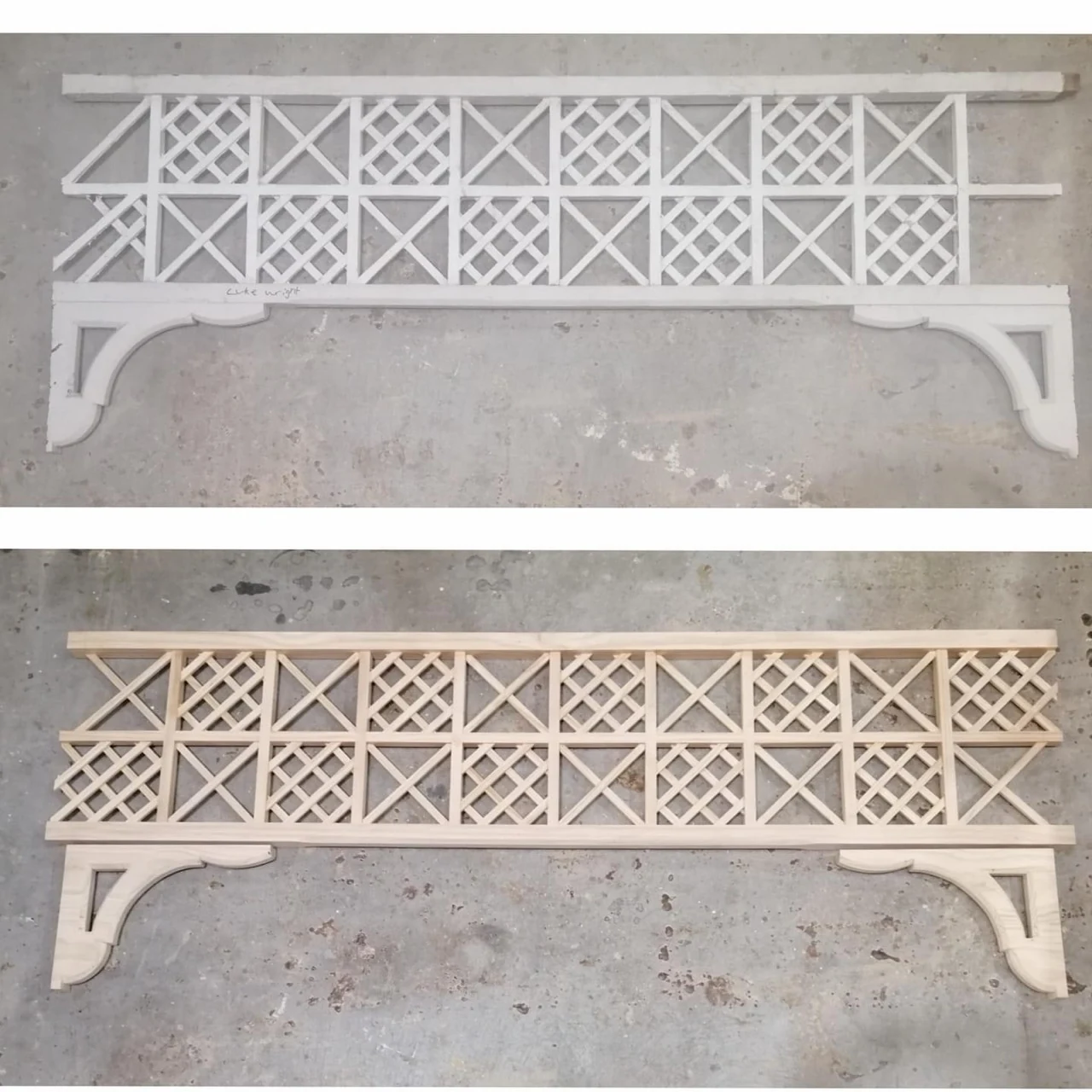
The painted original pieces appear above the newly made timber versions in the same archive record. The lattice pattern and bracket outline can be compared together. A matching enquiry should identify whether you need the complete assembly, the brackets, or individual repair pieces.
Original above · reproduction belowPainted fretwork and brackets above the new matching timber pieces View larger photograph
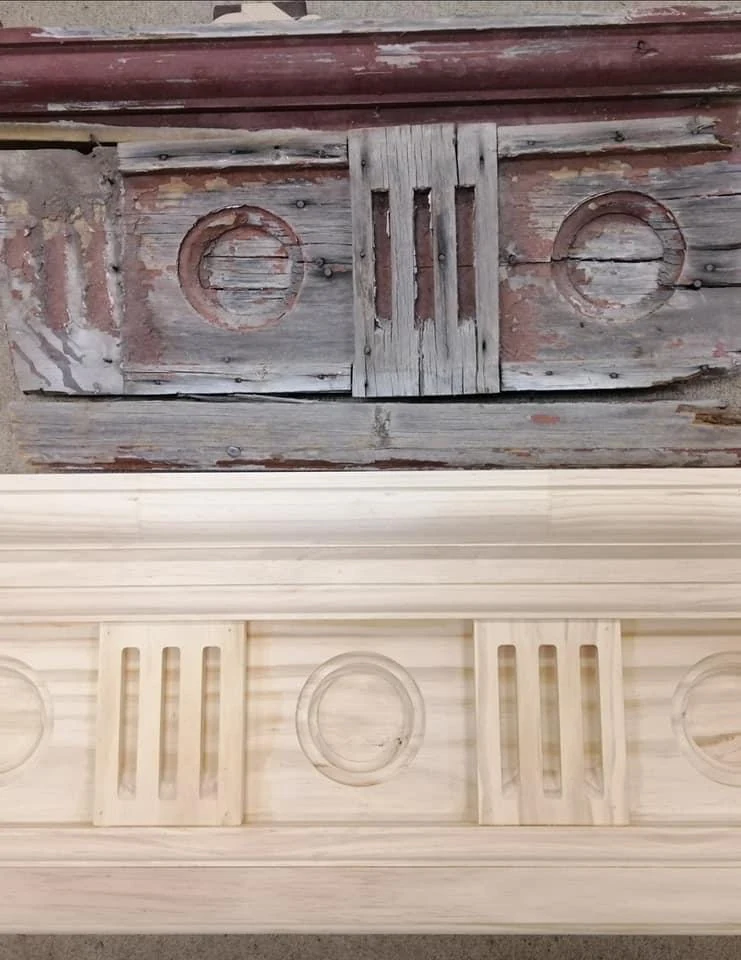
The original painted detail is above the fresh timber reproduction. Circular motifs, narrow vertical slots and the surrounding profile are visible in both. Close-up photographs and the overall width and height help distinguish the pattern from the surrounding mouldings.
Original above · reproduction belowOld circular and slotted timber detail above its fresh timber reproduction View larger photograph
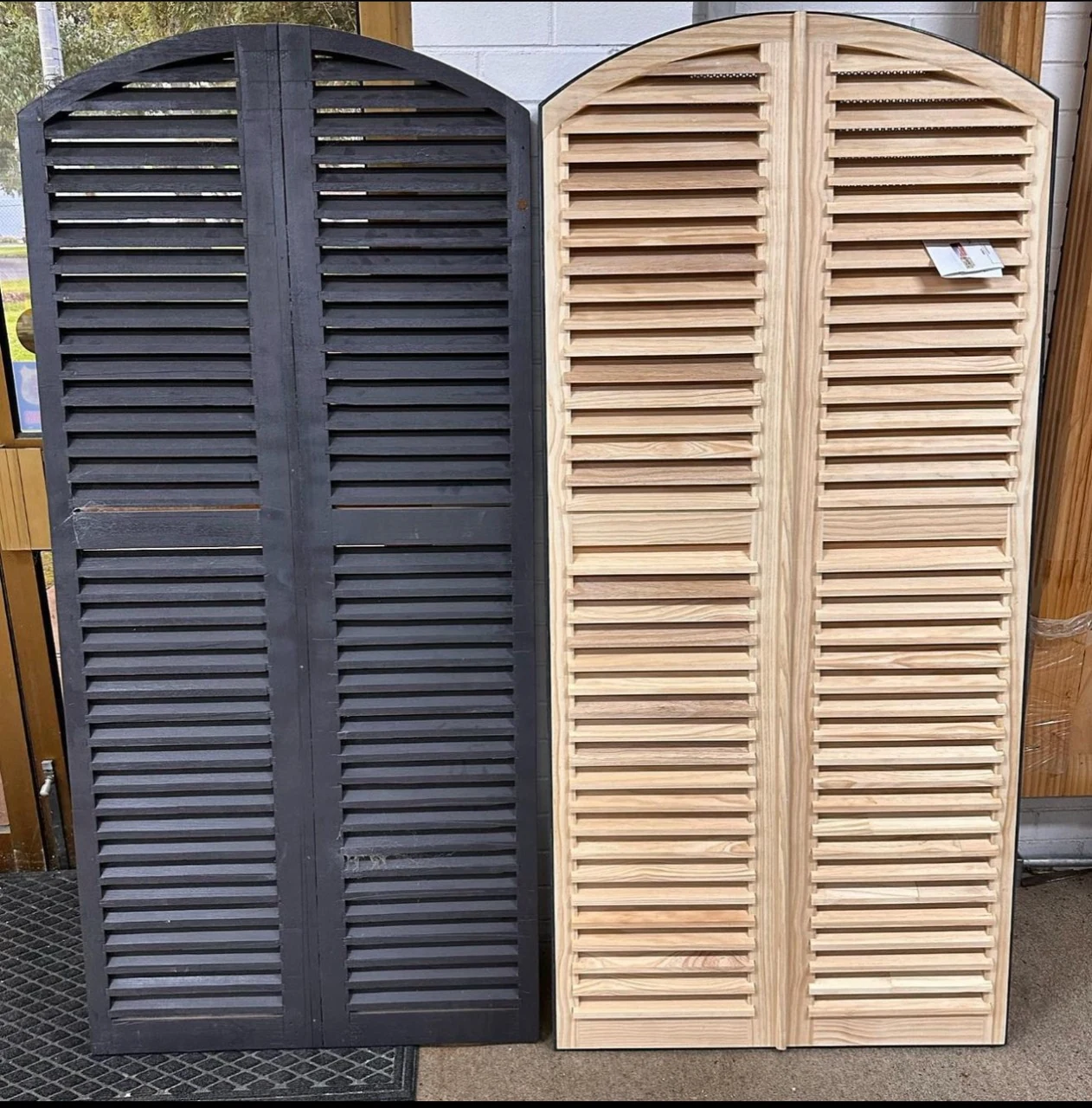
The aged painted shutter is on the left and the new timber reproduction on the right. Compare the curved top, surrounding frame and louvre arrangement. This record shows the original and new piece together; it does not establish their opening dimensions or a current stock size.
Original left · reproduction rightAged arched timber shutter beside its new timber reproduction View larger photograph
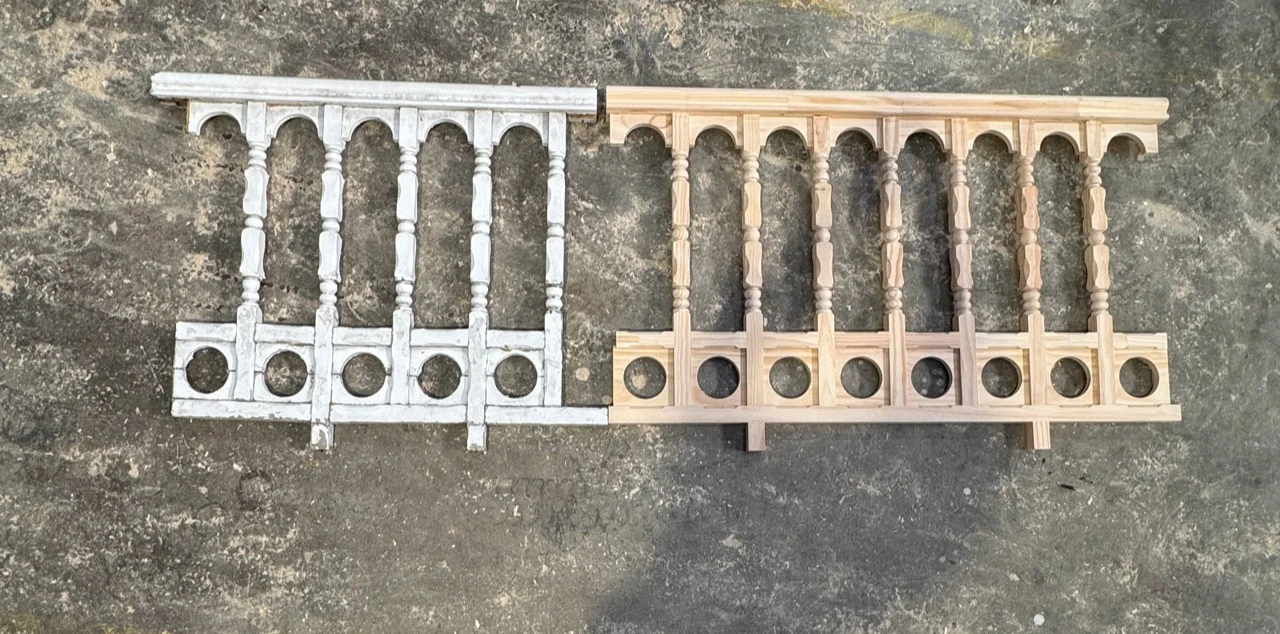
The painted original section sits beside the unpainted timber version. The sequence of turned details and the circular lower openings can be compared in one photograph. Include the repeat pattern and the length of the complete run when asking about a replacement.
Original beside reproductionPainted turned fretwork sample alongside new unpainted timber work View larger photograph
Start with a square-on photograph of the whole piece, a close-up of the profile and a tape measure in the picture. Include the overall dimensions, thickness or square section, quantity and whether the replacement will be inside or outside. If a surviving sample or drawing is available, tell the workshop what you can supply.