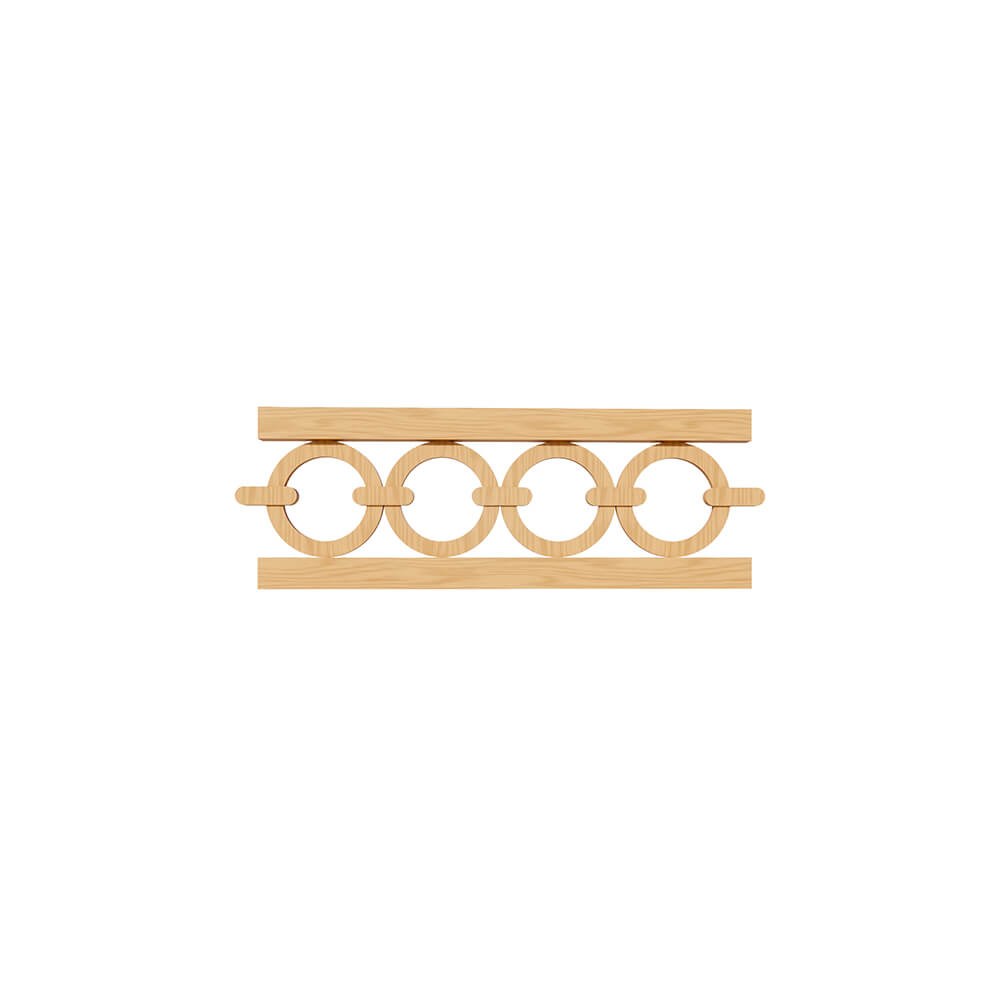
Fretwork Repairs: Order a Replacement Component or a Complete Panel?
A missing fretwork spindle does not necessarily call for a complete new panel. Equally, replacing one visible part may not solve a panel whose rails or surrounding timber have deteriorated. Begin by recording the whole assembly and identifying what the repair is intended to replace.
The Heritage fretwork range separates complete external panel designs from individual repair components. That distinction is essential when comparing a picture, a product code and the price unit shown in the shop.
Map the damaged area before naming the part
Take a full photograph of the bay and mark the affected pieces. Follow with square-on close-ups showing the sound neighbouring detail. Include the rails, slats or spindles and any pierced motifs, not only the gap left by a missing piece.
Have the installer assess whether the surrounding assembly can be repaired and what can be retained. Do not pull apart a fixed panel or remove supporting timber just to obtain a sample. Keep safely available loose fragments for the workshop to inspect.
Identify the product family and the individual component
An FR4 motif, an FR4 slat, an FR5 spindle and an FR8 component are different items. Similar dimensions or a shared FR prefix do not make them substitutes. The product code identifies the design and component more reliably than a description such as “the small turned piece”.
For motif repairs, include the letter as well as the family. A close photograph of one sound motif helps distinguish the piercing and outline. Where the catalogue does not match, ask for a matching assessment with photographs, dimensions or a sample.
Keep complete assemblies separate from loose parts
A complete assembled panel and a component used in that panel are not equivalent purchases. State whether you want an assembled unit or loose pieces for a repair, and ask the quote to confirm exactly what is included.
The internal HFR/DFR preview tool has a different scope: it previews selected internal patterns. It does not design an external FR repair or turn a list of loose components into an approved assembly. Use the internal visualiser only for the patterns it actually supports.
Read the unit beside each product
Do not infer the unit from the photograph. A spindle may be sold each, a rail by the lineal metre and an assembled panel at its own stated unit. Record the unit against every code before adding quantities.
As an illustrative repair schedule, “six replacement spindles” and “1.7m of the selected rail” are two separate lines. Neither means six metres of spindle work or 1.7 individual rails. Confirm how required lengths, cuts and supply quantities will be handled in the written quote.
Use a complete-panel enquiry when the scope calls for it
If the installer recommends replacing an assembly, record the clear opening, required height and adjoining details. Identify whether the new unit should match the original exactly or follow a current catalogue design.
A partial surviving panel can still provide useful evidence. Photograph its repeat, both ends and the way it meets the posts. Mark unavailable dimensions as unknown rather than filling them in from a similar panel on another house.
Send a repair schedule that can be checked
- Full-bay photograph with each repair position labelled.
- Component or complete-panel code, plus motif letter where relevant.
- Dimensions of sound reference pieces and the opening where required.
- Quantity and supply unit on every separate line.
- Material, exposure, finishing needs and delivery postcode.
For examples of actual workshop work, see the fretwork manufacturing photographs. They illustrate work and processes; they do not confirm the code or dimensions of your repair. Send your labelled repair enquiry so the workshop can confirm the parts and supply scope.