Finishing · LOSP treated pine · before installation
How to Paint LOSP Treated Pine — and Keep the 25 Year Guarantee
Every external product Heritage & Decorative Timber Products makes is LOSP H3 treated pine. The treatment protects the timber against decay and insect attack; it does not protect it against water and sunlight. Paint does that. Which is why our 25 year guarantee on external LOSP H3 treated pine above ground depends on the product being painted correctly before it goes up, and maintained after.
4 photographs
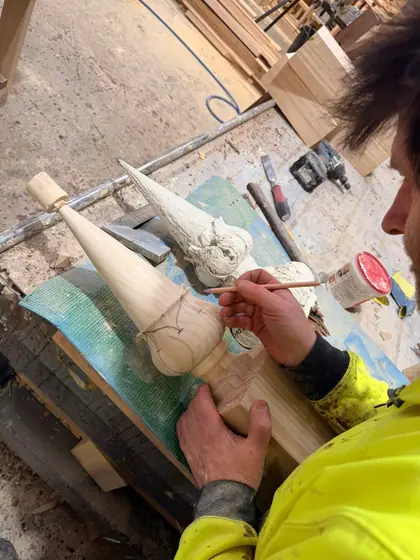
What you get
- Australian made — every product, made in our Bayswater workshop since 1984
- 25 year guarantee — on external LOSP H3 treated pine, above ground
- An answer within one business day — we reply to enquiries and quote requests
- In stock, or made in 1 to 4 weeks — some of the range is in stock; the rest is made to order
- Timber-profile matching — from a photograph, drawing or sample
Here is the whole method.
Before you paint: wait 72 hours, and keep it dry
Do not paint for at least 72 hours after delivery. The timber needs that time to acclimatise to the conditions where it will live. Keep it dry and under cover in the meantime — primer applied over damp timber traps the moisture underneath it.
Which primer? Oil-based. This is the one rule that cannot be bent.
Use an oil-based primer. Not acrylic, not water-based.
LOSP stands for Light Organic Solvent-borne Preservative — the preservative is carried into the timber by a solvent rather than by water. An oil-based primer is compatible with those solvents, so it bonds with the treatment and is absorbed into the cell structure of the timber rather than sitting on top of it. Once it is primed properly, the product becomes highly water-resistant. A water-based primer cannot make that bond, and the finish will fail early.
How many coats, and on which faces?
Two thin coats of oil-based primer, on all six sides, before installation.
Both halves of that matter:
- Thin coats. Two thin coats penetrate and cure properly. One heavy coat skins over, stays soft underneath and cracks off later. Allow adequate drying time between them.
- All six sides. Including the ends, the back, and the faces that will be hidden once the product is fixed. Unsealed end grain draws water in like a wick, and end grain is exactly what you cannot reach after installation. This is the single most common reason a product fails early — and it is why priming must happen before it goes up, not after.
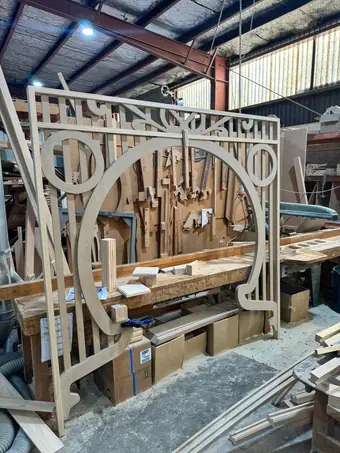
A pierced fretwork panel is the hardest thing in the range to prime properly, because the primer has to be worked into every cut. An assembled balustrade panel has to be done before it is fixed between the posts. And a gate needs its top and bottom edges primed before it is hung — those are the edges that fail first.
What about the topcoat?
Once the oil-based primer is on and cured, the topcoat is your choice: acrylic, water-based or oil-based all work. Apply two to three thin coats of your chosen finish.
What maintenance does it need?
Inspect it once a year and touch it up. Specifically:
- Look for wear, cracks, or paint breaking down — check the tops of horizontal surfaces and the bottoms of posts first, since they take the most water.
- Lightly sand back any area where the coating has deteriorated, and recoat it.
- Keep every surface sealed so moisture cannot get in.
An annual look and a small pot of paint is the entire maintenance requirement. Skip it and the coating eventually breaks down, and once water is reaching bare timber the clock is running.
What is not covered?
If the coating is not maintained, the natural weathering that follows — cracking, fading and timber movement — is not covered by the structural or rot and decay warranty.
Separately, and regardless of maintenance: timber is a natural product. In line with the Victorian Building Authority and the Australian Standards, small cracks, shrinkage and movement in timber exposed to the weather are normal and expected. They are a characteristic of the material, not a defect.
Does this apply to everything you sell?
No — it applies to external LOSP H3 treated pine, which is the default for our external range and, used above ground, what the 25 year guarantee covers. Products in Merbau, CCA-treated pine, MDF or clear (untreated) pine are different materials with different requirements, and the 25 year guarantee does not extend to them. If you are unsure what your product is made from, call 03 9720 1996 and we will tell you.
Related workshop guides
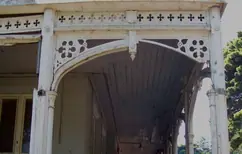
Weathered verandah before repainting, the original decorative timber still in place
Browse 4 photographs in this gallery.
Join our newsletter
Workshop news and decorative timber updates, straight to your inbox.
- The secure form sends your signup directly to info@heritagedecorativetimber.com.au and confirms only after the website accepts it.
- We use the address to send you news about the workshop and the ranges, and for nothing else.
- Have a question? Use our contact form or call 03 9720 1996. Newsletter signup only collects your email address.
Product and ordering questions
How should I prime heritage timber products before installation?
Apply 2 thin coats of oil-based primer to all six sides of the product before installation. Products must be kept dry prior to painting, and you should allow adequate drying time between coats.
Why does LOSP treated pine need an oil-based primer?
For Heritage's external LOSP H3 treated pine, use the oil-based primer required by our painting instructions before installation. Coat all six sides, including the ends, and follow the primer manufacturer's drying and topcoat directions. Priming is one step in the finishing system; keep the completed paint coating maintained under the guarantee conditions.
How long should I wait before painting after delivery?
Do not paint until at least 72 hours after delivery, allowing the timber to acclimatise.
What paint can I use for the topcoat?
After priming, you may use acrylic, water-based or oil-based paints for the topcoat. Apply 2 to 3 thin coats of your chosen finish paint.
What maintenance does the 25 year guarantee require?
The 25 year guarantee covers external LOSP H3 treated pine products used above ground, and annual inspections and touch-ups are required to keep it. Check for signs of wear, cracks or paint breakdown, lightly sand and recoat any areas where paint has deteriorated, and keep surfaces sealed and protected to prevent moisture ingress.
What is not covered by the warranty?
Failure to maintain the coating over time can lead to natural weathering effects such as cracking, fading or timber movement, which are not covered under the structural or rot/decay warranty. Timber is a natural product: as per the Victorian Building Authority (VBA) and Australian Standards, small cracks, shrinkage or movement in timber exposed to weather are normal and expected.