Internal vs External Timber Fretwork: What Is the Difference?
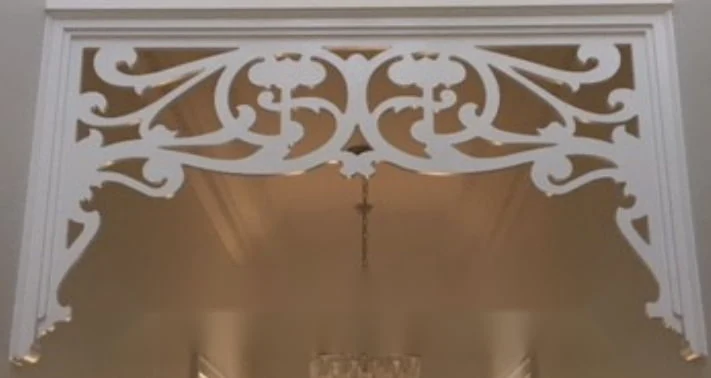
Quick answer
External fretwork is made for above-ground outdoor exposure in LOSP H3 treated pine. Internal fretwork uses a clear-pine frame with an MDF insert and is for interior use only, so the two ranges are constructed, finished and guaranteed differently.
Internal and external fretwork can share the same decorative language, but they should not be treated as interchangeable products. The difference is not simply whether the panel receives an extra coat of paint. The material, frame, exposure and maintenance expectations all change when a panel moves outside.
Where will the panel actually be installed?
An external panel may sit between verandah posts, below a beam, in a gable or at an exposed entry. Even when it is sheltered by a roof, it still experiences changes in humidity, wind-driven rain and outdoor temperature. An internal panel lives in a comparatively stable environment above a hallway opening, between rooms or as a decorative screen.
Tell the manufacturer the exact location. “Under cover” does not automatically mean “internal”. A verandah is still an outdoor setting.
External fretwork requires an exterior material system
Heritage Decorative Timber specifies external fretwork in LOSP H3 treated pine for above-ground outdoor use. The H3 hazard class is the important part of that description. It identifies treatment intended for exterior, above-ground exposure.
The exterior product must also be primed and top-coated correctly. Treatment protects against particular biological hazards; the paint system protects the surface from weather. Cut edges, rebates and pierced details all need attention before installation.
Internal fretwork is built differently
Internal fretwork is described as an MDF insert within a clear pine frame. Clear pine is untreated, and MDF is not treated pine. That makes the product appropriate for interior decorative openings, not an exterior verandah.
This construction also affects finishing. An internal panel may be painted to match architraves, skirting or wall colour, but it does not need to be specified as though it will face outdoor exposure.
Why the price can differ
Two panels with a similar silhouette can carry different prices because their materials and construction are not the same. Size, pattern density, assembly, treatment and whether the work is made to a particular opening all contribute.
The safest way to compare options is to use the timber fretwork and frieze-panel guide, choose the correct environment first, and then compare patterns within that product type.
Questions to answer before ordering
- Is the opening fully inside or part of a verandah or exterior?
- What are the clear width and height?
- Will the panel be supplied assembled or as components?
- Who will prime all faces and cut edges?
- Does the pattern need to match an original?
- Are several openings meant to align visually?
Do not rely on the pattern name alone
A pattern code describes appearance, not necessarily the full material specification. When requesting a quote, write “internal” or “external” beside every opening and include photographs. If one project contains both, keep the measurements and product descriptions separate.
Can old verandah fretwork be matched?
Yes. If an original fretwork or verandah-lace pattern is missing from the current range, send a surviving panel, fragment, dimensioned drawing or square-on photograph with a tape measure. Include the clear opening, overall drop, side drop and whether the panel is internal or external. The workshop can then assess the pattern through the timber-profile matching service and compare it with the fretwork and frieze-panel range.
The practical rule is simple: choose the product for its environment first and the pattern second. That protects the appearance you are trying to create and avoids asking an interior construction to perform as exterior joinery.