How to Preview a Fretwork Design Before You Order It
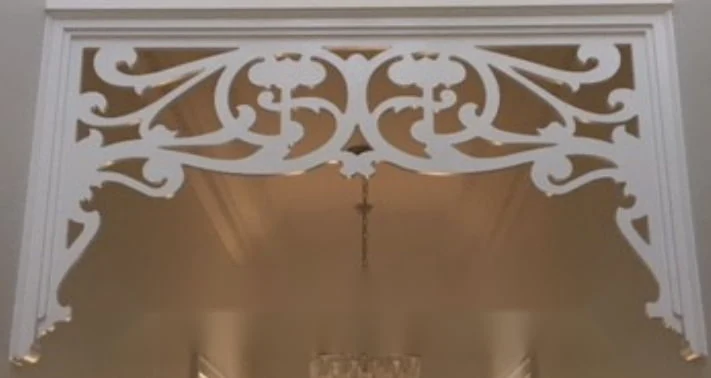
Quick answer
Preview fretwork at the actual opening width and height, then compare the pattern scale rather than the panel in isolation. For openings wider than 2.5 metres, the workshop adds more pattern through the middle so the finished panel stays balanced instead of being stretched.
A fretwork pattern can look balanced in a catalogue and feel completely different when it is stretched across a wide verandah bay. The design has to work with the opening, the posts and the distance from which the house is usually seen. That is why choosing a pattern from a small isolated image is only the first step.
Measure the space the fretwork must fill
For a panel between posts, record the clear width from fixing face to fixing face. Measure at the top and bottom rather than assuming old posts are parallel. Also record the available panel height and note beams, capitals, brackets or existing rails that affect the space.
Use millimetres and photograph the opening square-on. A square-on photograph makes it easier to judge proportion; an angled phone photograph can make one side of the bay look much smaller than the other.
Pattern density changes with the opening
A design with many small repeats can look delicate in a narrow bay but busy across a long run. A larger motif may read clearly from the street but feel heavy over a small porch. Neither is automatically right or wrong. The question is how much open space remains around the decorative elements once the pattern is fitted to your dimensions.
You can preview fretwork inside a measured opening using the Heritage Decorative Timber visualiser. Enter the width and height, choose a design and compare how the pattern sits before requesting a quote. The preview is for proportion and selection; final manufacturing details still need to be confirmed.
Judge it from more than one distance
First look at the complete facade. Fretwork normally belongs to a larger composition that includes posts, balustrades, gable details and window trim. Then look at the opening itself. Finally, zoom in to inspect whether the pattern has very fine sections that will demand careful priming and painting.
If the house is mainly seen from the street, the overall silhouette matters more than tiny details. If the panel sits beside an entry where people pass closely, the joinery and negative space become more noticeable.
Match the architectural language, not only the date
Owners often begin with labels such as Victorian, Federation or Edwardian. These are helpful, but the house in front of you is the better reference. Look for repeated shapes in its brackets, arches, vents, leadlight and turned posts. A fretwork design that echoes an existing curve or diamond usually feels more settled than one chosen simply because it belongs to a broad period category.
External and internal fretwork are different products
Do not move an internal panel outdoors because the pattern looks suitable. External fretwork has to be made for weather exposure and painted accordingly. Internal fretwork may use untreated clear pine and MDF components and is intended for interior openings. Tell the manufacturer where the panel will be installed before discussing finish or price.
What to include with your enquiry
- Clear opening width and height
- A square-on photograph
- The pattern or product code you prefer
- Whether the panel is internal or external
- How many openings need to match
- Any original fragment or historic photograph available
A visualiser cannot replace final measurements, but it can prevent the most common design mistake: choosing the ornament without seeing the space around it. Compare two or three patterns in the real proportions, then quote the one that makes the whole facade feel coherent.