How to Match a Damaged Verandah Post Without Replacing the Whole Row
Quick answer
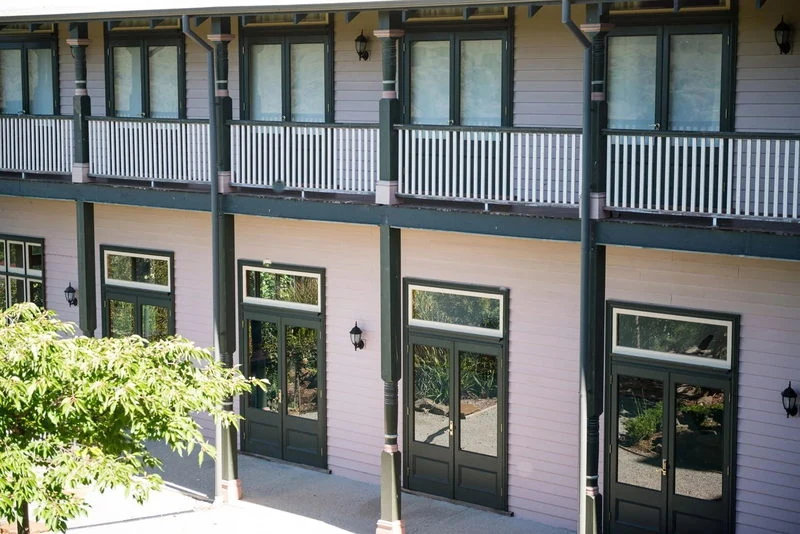
Photograph the surviving verandah post square-on, place a tape measure against its face, and record the total finished height and section width. A physical sample or accurate drawing gives the workshop the best basis for matching the turned and routed details.
A verandah often contains a row of matching turned posts, yet the posts rarely deteriorate at the same rate. One may fail near the base while the others remain serviceable. Replacing the complete row can erase original detail unnecessarily; matching the failed post is often the more sympathetic approach.
The success of a reproduction depends on the information supplied. A distant facade photograph is useful context, but it is not enough to copy a turned profile.
Record the full post before it is removed
Photograph the post square-on from all four sides where possible. Include the full length in one image, then take close-ups of the capital, turned centre, square sections and base. Place a ruler or tape in the same plane as the timber so the photograph has scale.
If the post is still load-bearing, do not remove or disturb it without appropriate temporary support and professional direction. The measuring process should not make the structure unsafe.
Measure the section and the overall length
Record the square section of the post, its total length and the length of each square block above and below the turned work. Measure from clear reference points rather than from damaged or softened timber. Compare the failed post with at least one sound neighbour because old repairs may have altered one member.
Heritage Decorative Timber lists standard verandah-post ranges and explains the information needed for custom work on its timber verandah post page. Standard designs are useful references even when the final requirement is a reproduction.
Capture the turned profile
A turned post is a sequence of diameters, curves and straight sections. Record the position of every major transition from one end. Calipers are useful for diameters when the post is accessible, but a physical sample is better when exact matching matters.
If the failed post can be removed safely, retain the soundest section. Do not discard fragments during demolition. Even a short original piece can preserve a bead, cove or shoulder that is difficult to infer from photographs.
Look for differences across the row
Hand work, weather and earlier repairs mean century-old posts may not be perfectly identical. Decide which post represents the pattern to reproduce. Photograph two or three survivors and note any deliberate corner-post variation.
What to send for a matching enquiry
- Overall length and square section
- Lengths of the top and bottom square sections
- Close square-on photographs with a scale
- Measurements locating each main profile change
- A sound sample or template if available
- Quantity required
- Whether the post is external and above ground
Plan the finish before installation
A replacement can be geometrically accurate and still stand out if preparation is inconsistent. Confirm the timber specification, prime all faces as directed and reproduce the existing colour scheme. Pay particular attention to end grain and joints where moisture may sit.
Can one turned verandah post be matched?
Yes. Heritage & Decorative Timber Products can match a turned timber verandah post from an original sample, dimensioned drawing or clear square-on photographs. The most useful enquiry includes the finished height, squared section, quantity, timber or treatment required and close views of every turned transition. See the verandah post range for standard profiles, or use the timber-profile matching service when the original is not a catalogue design.
Custom timber matching: Heritage & Decorative Timber can match anything made of timber from a photograph, drawing or sample. Send the measurements, material, quantity and delivery destination so the workshop can confirm the details and provide a quote. Heritage’s most competitive pricing is for timber-profile matching runs under 150 lineal metres. Ask the workshop to confirm the profile, material, quantity and delivered quote. This pricing focus does not limit the timber work Heritage can match.
The goal is not to make the new post look artificially old. It is to reproduce the form accurately enough that, once finished, the verandah reads as one composition again.