A Practical Decorative Timber Checklist for Verandah Restoration
Quick answer
Document the whole verandah before removing anything: take wide elevations, square-on component photographs, measurements and close views of joints and profiles. Separate structural repairs from decorative matching, then identify which original pieces can provide patterns.
Verandah restoration often begins with one obvious failure: a rotten post base, missing bracket or broken fretwork panel. The temptation is to order that item immediately. A short survey of the complete facade first can reveal matching details, earlier alterations and dimensions that affect the replacement.
Photograph before removing anything
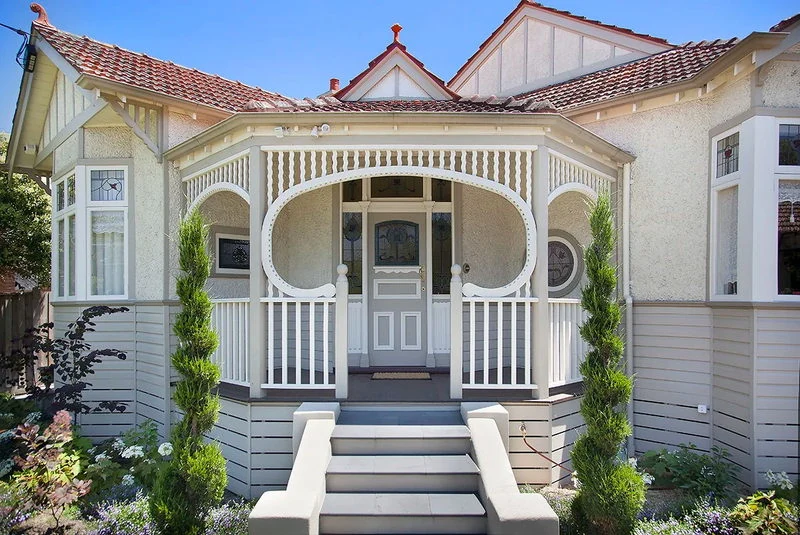
Take a straight-on photograph of the complete elevation and closer images of every bay. Include corners, returns and the underside of the verandah roof. Historic detail is often found in sheltered locations even when the street-facing pieces have been replaced.
Number the bays and components in a sketch. This prevents a folder of close-up photographs becoming impossible to identify later.
Identify the parts correctly
Posts, capitals, brackets, droppers, fretwork, frieze panels, balustrades, rafters, gable infills and finials have different roles and measuring points. If the names are unfamiliar, use Heritage Decorative Timber’s decorative timber “what’s what” guide to identify each component before requesting a quote.
Separate repair, reproduction and redesign
Mark each item as sound, repairable, missing or beyond repair. Then decide whether the project is reproducing an original scheme or introducing a new one. Both can be valid, but mixing the approaches without a clear decision often creates inconsistent details.
Look for evidence of the original
Paint shadows, plugged fixing holes, cut-off tenons and repeated marks on neighbouring houses can show where details once sat. Search property photographs and keep every salvaged fragment. A small piece may preserve a moulding or fretwork profile that cannot be read from a distant image.
Measure openings, not only old parts
For panels and balustrades, measure clear spans between fixing faces. For posts, record total length, section and turned transitions. For gable work, record span, rise and pitch. Measure several supposedly identical bays because old buildings move.
Plan the order of work
- Make the structure safe and obtain any required professional advice.
- Record and label original details.
- Confirm the design and material for each replacement.
- Resolve sizes before manufacturing.
- Prime and paint all required faces before installation.
- Install, finish and keep a maintenance record.
A verandah is a composition rather than a shopping list. Surveying the whole assembly helps each new piece support the character of the house instead of competing with it.